Post-Surgical & TraumaVerified Clinical Protocol
Post-Fracture Rehabilitation
After fracture union and management, physiotherapy helps restore joint movement, muscle strength, balance, and daily function once medically cleared by the treating orthopaedic surgeon.
Common Presentations
Typical symptoms and patient experiences- Joint stiffness following immobilization in plaster or brace
- Muscle weakness and disuse atrophy
- Reduced weight-bearing tolerance
- Reduced function and apprehension using the limb
Assessment May Include
Comprehensive baseline clinical evaluation- Range of motion of joints above and below fracture
- Muscle strength and bulk measurement
- Gait mechanics and weight-bearing capability
- Balance and functional tasks
- Adherence to medical weight-bearing clearance
Physiotherapy Management May Include
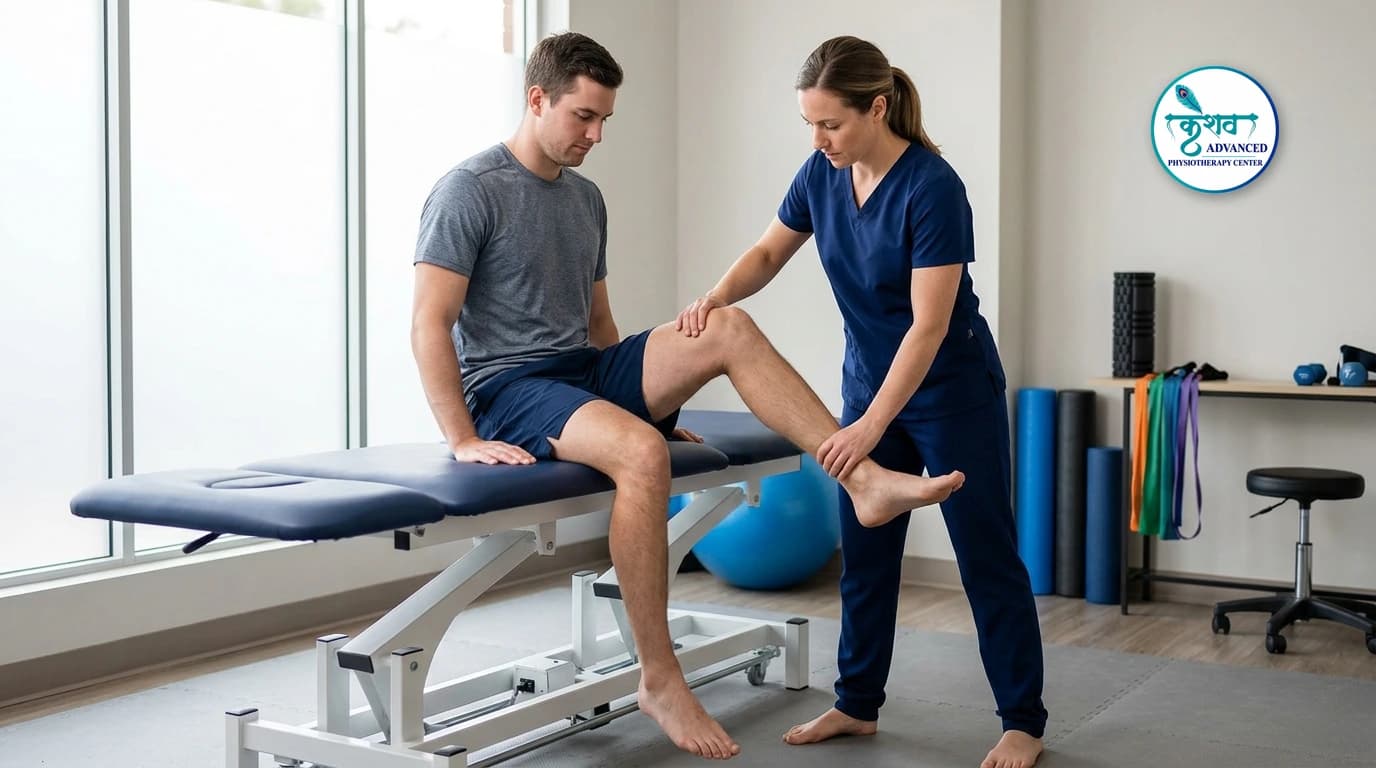
Multi-faceted therapeutic approach adapted to your recovery stageGentle joint and soft-tissue mobility exercises
Progressive strengthening adhering to healing bone tolerance
Gait training with progressive weight bearing
Balance and proprioceptive exercises
Functional rehabilitation for daily tasks
Rehabilitation Goals
Restore movement and strength while strictly following medical weight-bearing restrictions.
Medical Coordination Protocol
Medical coordination is important when symptoms are severe, rapidly worsening, associated with major trauma, significant neurological change or unexpected focal pain.
Schedule Your Assessment
Get Started with Post-Fracture Rehabilitation Care
Consult with Dr. Nikunj Joshi and Dr. Priyanshi Vani at our Ghodasar clinic or request a home visit.
Related Post-Surgical & Trauma Conditions
View All 24 Conditions →Total Knee Replacement Rehabilitation
Post-op clinical and home physiotherapy to restore full knee extension, flexion, and independent walking.
View Details
Post-Operative Orthopaedic Rehabilitation
Comprehensive care planned around surgical procedure, tissue healing stages, and functional goals.
View Details